Your muscles hurt worse than they should. Not injured-hurt. That heavy, stiff, can't-walk-down-stairs hurt that hits 24–48 hours after a hard shift or a heavy workout. That's delayed onset muscle soreness — DOMS — and it's the body's inflammatory response to the microtears that make you stronger. The problem: it slows you down before you've recovered enough to go again.
Cold water immersion is the most evidence-backed method for reducing that soreness and getting back to full capacity faster. Not foam rolling. Not stretching. Not an ice pack on your quads. Full-body cold water immersion — a cold plunge.
Here's what the research actually says and how to apply it.
Why Your Muscles Hurt Worse Than They Should
DOMS peaks at 24–72 hours after exertion. This is not a random quirk — it's a precisely timed inflammatory cascade. When you stress muscle fibers (through heavy lifting, a 10-hour physical shift, or a long run), the mechanical damage triggers an immune response. Neutrophils flood the tissue within hours. Macrophages follow. Prostaglandins sensitize nerve endings. The result: swelling, stiffness, and pain that makes the next session harder or — for physical workers — makes the next shift dangerous.
This is why recovery isn't optional for blue-collar workers. A tradesperson who ignores muscle recovery isn't choosing between "extra gains" and "feeling okay" — they're choosing between function and dysfunction. When your body can't recover fast enough to keep pace with your job, the soreness compounds day over day until something breaks down.
The question isn't whether to recover. It's how to do it efficiently.
How Cold Water Immersion Reduces Inflammation and Soreness
Cold water immersion works through four primary mechanisms. Understanding them matters because it explains why the protocol is what it is — and why shortcuts like a cold shower don't deliver the same results.
1. Vasoconstriction and the Rewarming Flush
When you submerge in cold water (50–59°F), blood vessels near the skin surface constrict rapidly. This drives blood away from the extremities and toward the core. When you exit the water and rewarm, vasodilation occurs — vessels dilate and the returning blood flow flushes metabolic waste products (lactate, hydrogen ions, inflammatory markers) from the muscle tissue. This "rewarming flush" is a meaningful part of the recovery mechanism, which is why sitting in cold water for 30 seconds does nothing — you need the full thermal stress cycle.
2. Reduced Inflammatory Signaling
Cold water directly reduces the rate of inflammatory signaling. Prostaglandin synthesis slows at lower tissue temperatures. Neutrophil infiltration into damaged muscle is attenuated. The result is a less aggressive initial inflammatory response — which means less swelling, less sensitization of nerve endings, and less perceived soreness in the 24–48 hours that follow.
3. Hydrostatic Pressure
This is why cold showers can't replicate a cold plunge. When you're submerged in water, hydrostatic pressure acts uniformly on the entire body. This pressure squeezes extracellular fluid (including inflammatory fluid in swollen muscle tissue) back into the circulatory system. It's the physiological equivalent of compression — but applied to every muscle group simultaneously. You cannot replicate this with a shower, a cold pack, or a compression sleeve.
4. Central Nervous System Recovery
Beyond the peripheral effects, cold immersion acutely reduces perceived fatigue and mental load through activation of the sympathetic nervous system followed by parasympathetic rebound. In practice: you come out of a cold plunge feeling more alert and less "flat" than you went in. For physical workers who stack multiple days of demanding shifts, this CNS recovery effect compounds significantly over a week of consistent use.
Cochrane Systematic Review on Cold Water Immersion (Bleakley et al., 2012): This is the landmark systematic review on CWI and recovery. Pooled data from 17 randomized controlled trials confirmed that cold water immersion was significantly more effective than passive rest for reducing delayed onset muscle soreness. Mean reduction in DOMS was approximately 20% compared to control conditions.
The reviewers noted that 10–15°C (50–59°F) water for 10–15 minutes represented the most commonly effective protocol across the included studies. They flagged insufficient evidence to compare CWI against other active recovery modalities at that time.
Bleakley C, et al. "Cold-water immersion (cryotherapy) for preventing and treating muscle soreness after exercise." Cochrane Database of Systematic Reviews, 2012.Bleakley et al., 2014 — Optimal CWI Temperature: A follow-up trial examined the dose-response relationship between water temperature and recovery outcomes. Cold water at 10–15°C (50–59°F) consistently produced meaningful DOMS reduction and functional recovery improvements. Colder water (below 10°C / 50°F) did not meaningfully improve outcomes and increased cold shock risk. The data supported the middle of the therapeutic window, not the extreme.
Bleakley CM, et al. "Whole-body cryotherapy: empirical evidence and theoretical perspectives." Open Access Journal of Sports Medicine, 2014.Who Benefits Most from Cold Water Immersion
The research is clear that CWI delivers meaningful recovery benefits across populations. But three groups see the most dramatic quality-of-life impact:
Physical Labor Workers
Construction workers, electricians, plumbers, HVAC techs, warehouse staff, nurses, firefighters — anyone whose job demands physical output five days a week with minimal recovery time. The compounding soreness problem is uniquely severe for this group because the work doesn't stop. A strength athlete can deload for a week. A plumber can't stop being a plumber. Cold water immersion is one of the few tools that meaningfully accelerates recovery within the tight window of a workday and evening.
Athletes with High Training Frequency
Endurance athletes (triathletes, marathon runners, competitive cyclists) who train once or twice daily rely on rapid recovery between sessions. Missing a session due to soreness or fatigue is a direct performance cost. CWI's ability to reduce DOMS 24–48 hours post-exertion means less training disruption and better quality in subsequent sessions. This is why professional endurance teams have had cold plunge tubs in team facilities for 20+ years.
Weekend Warriors Over 35
Recovery rate slows meaningfully with age. A 25-year-old might recover from heavy squats in 36 hours. The same person at 45 might need 72–96 hours. Cold water immersion doesn't reverse aging — but it accelerates the recovery process enough to meaningfully shrink that window. For the person who plays recreational sports on weekends and works physically demanding jobs Monday through Friday, the math is simple: faster recovery means less accumulated fatigue, fewer injury risk situations, and a longer active career.
Cold plunging blunts acute hypertrophy signaling. A 2015 study (Roberts et al., Journal of Physiology) found that CWI after strength training reduced long-term muscle growth and strength gains compared to active recovery. The mechanism: the anti-inflammatory response that reduces soreness also attenuates some of the anabolic signaling (satellite cell activity, mTOR pathway activation) that drives muscle growth.
For pure bodybuilders or powerlifters in a dedicated hypertrophy block: cold plunge after every lifting session may cost you gains. The practical compromise is to cold plunge on rest days, after cardio/conditioning sessions, or after high-volume work shifts — and skip it immediately after heavy compound lifting if maximum hypertrophy is the primary goal.
For everyone else — physical workers, endurance athletes, weekend warriors — the recovery benefit almost always outweighs the marginal hypertrophy cost. You're optimizing for function, not mass.
How to Start: Temperature, Duration, and Frequency
Beginner Week-by-Week Ramp
| Week | Temperature | Duration | Frequency | Goal |
|---|---|---|---|---|
| Week 1 | 58–60°F | 5–7 min | 3x | Acclimate — establish the habit |
| Week 2 | 55–58°F | 8–10 min | 4x | Move into the therapeutic range |
| Week 3+ | 50–55°F | 11–15 min | 4–5x | Full protocol — optimize recovery |
Ice works. If you're starting out, a quality insulated tub with 20–30 lbs of ice gets you to the therapeutic range. The problem is cost and consistency — at 5 sessions/week, ice costs $80–120/month in most markets, and the temperature isn't as precise.
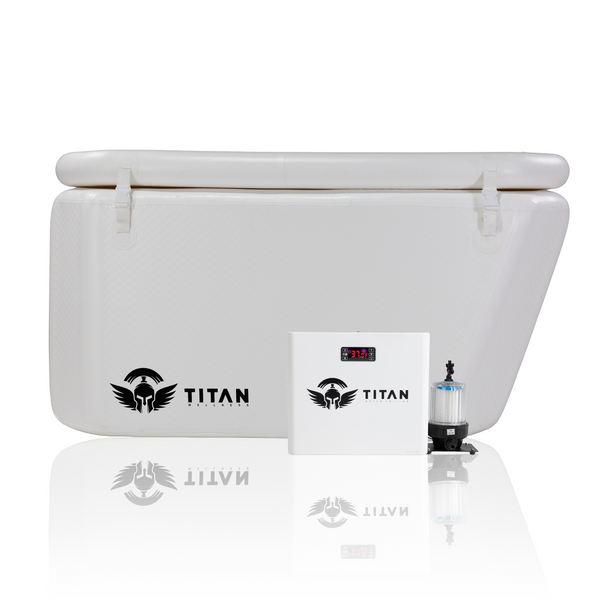
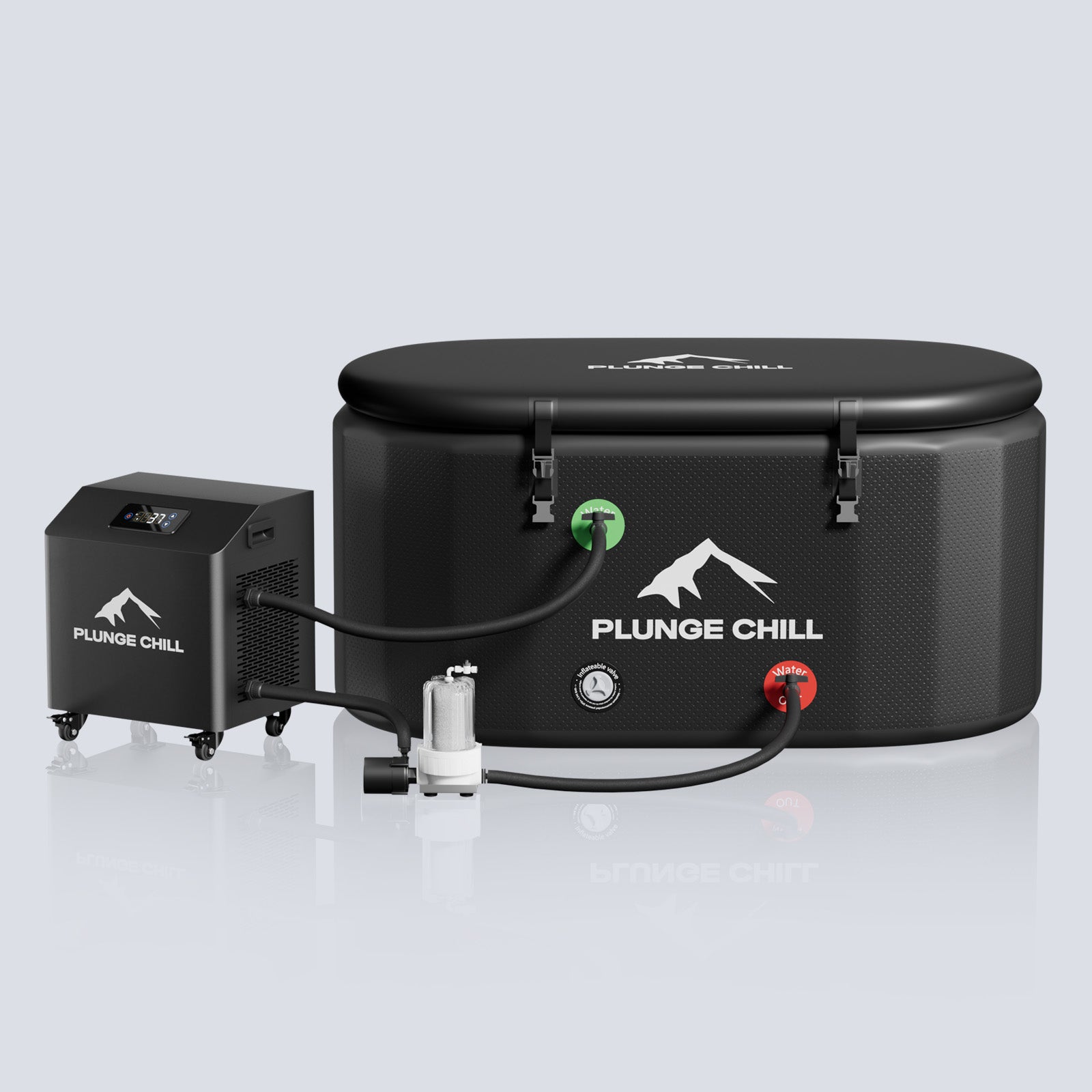
A chiller is better. A chiller maintains your target temperature without ice, automatically, every session. You hit 55°F exactly. You get in, you hit the window, you get out. No temperature guessing, no ice runs on the way home from a 10-hour shift. For anyone plunging more than 3x/week, a chiller bundle ($948–$1,499) pays for itself within a year on ice savings alone.
Cold Plunge Setups That Hit the Recovery Protocol
Any cold plunge tub that can hold 50–59°F water is functionally capable of delivering the research-backed recovery benefit. The difference between setups is in precision, convenience, and daily friction — which directly determines whether you actually use it or not.

Frequently Asked Questions
Ready to Actually Recover?
Titan Wellness, Plunge Chill, and ColdLife — the three cold plunge brands we carry, from $79 to $12,999. Use POLARBURN5 for 5–10% off Titan Wellness and Plunge Chill. Use POLARBURN for $250 off any ColdLife product.
Shop Titan Wellness → Shop Plunge Chill → See All Cold Plunges →