Your back is locked up. Your shoulders are carrying two weeks of accumulated soreness. You've got another five days ahead of you. Cold water gets most of the recovery attention — but heat therapy is doing just as much work, and for a lot of guys it's a better fit with how they actually feel after a long shift.
Here's the straight answer: saunas reduce muscle soreness by increasing blood flow, improving circulation, and helping your body clear out metabolic waste faster. The research backs this up. The protocol is simple. And if you're doing physical labor for a living, a regular sauna habit is one of the smartest things you can add to your recovery stack.
This is what you need to know — including when heat is the right call and when it's not.
What's Actually Happening in Your Body
When you sit in a sauna, your core temperature rises. Your body responds by dilating blood vessels — vasodilation — which sends significantly more blood to muscle tissue. That increased blood flow does three things that matter for recovery:
- Delivers oxygen and nutrients to damaged muscle fibers that need them to repair
- Flushes out metabolic waste — lactic acid, hydrogen ions, and other byproducts from intense exertion
- Reduces muscle stiffness by warming the tissue, which improves flexibility and range of motion
Your body also produces heat shock proteins (HSPs) during sauna exposure. These proteins act like cellular repair crews — they help refold damaged proteins in muscle cells and protect them from further stress. Regular sauna users build up a higher baseline of heat shock proteins, which means better baseline recovery capacity over time.
Cold therapy works by constricting blood vessels and reducing inflammation aggressively — it's fast and blunt. Heat therapy works by expanding blood vessels and increasing flow — it's more gradual and supports the repair process directly. They're not competing. They're targeting different phases of the recovery process. Read our cold plunge vs ice bath guide if you want to understand when cold therapy is the right call instead.
What the Research Shows
The evidence on sauna use for muscle recovery is solid and getting stronger. Here's what's actually documented:
Laukkanen et al. (2018) — European Journal of Epidemiology: Regular sauna bathing (4–7 times per week) was associated with significantly lower all-cause mortality and cardiovascular risk, partly through sustained improvements in circulation and vascular health. Workers with physically demanding jobs showed the strongest outcomes.
Mero et al. (2015) — Springerplus: Post-exercise far-infrared sauna use at 35°C (95°F) for 30 minutes reduced DOMS significantly compared to passive recovery. Neuromuscular performance was better preserved in the sauna group in the 96 hours post-exercise.
Podstawski et al. (2021) — BioMed Research International: A single 30-minute sauna session elevated heart rate to 120–150 BPM — equivalent to moderate aerobic exercise — while increasing circulating norepinephrine by up to 300%. The cardiovascular and hormonal response closely mirrors light active recovery.
Research summary compiled from peer-reviewed sources. Individual results vary based on session temperature, duration, and individual physiology.The bottom line from the research: sauna heat is a legitimate recovery tool, not bro-science. The mechanisms are well-understood. The outcomes are documented. And the practical barrier is lower than most guys think — a 15–20 minute session, 3–4 times a week, is enough to see measurable benefit.
Infrared vs Traditional Sauna: Which Works Better?
This is the practical question most guys have. Both work. They work slightly differently. Here's the breakdown:
| Factor | Traditional Sauna | Infrared Sauna |
|---|---|---|
| Temperature range | 170–195°F (77–91°C) | 120–150°F (49–65°C) |
| How it heats | Hot air heats the room, then you | Radiant energy heats your body directly |
| Intensity | More intense, shorter tolerance window | More tolerable, longer sessions possible |
| Effective session length | 15–20 minutes | 20–30 minutes |
| Home installation | Requires ventilation, higher voltage | Standard outlet, easy setup |
| Muscle penetration depth | Surface heating via hot air | Radiant heat penetrates deeper |
| Recovery impact | Strong circulation boost, proven | Equivalent or slightly better DOMS reduction |
| Cost range | $2,000–$16,000+ | $699–$8,000+ |
For home use, infrared saunas win on practicality. Lower running temperature means you can stay in longer without overheating, easier to install, and the entry price is lower. If you want the full traditional sauna experience — the heat, the steam, the intensity — a traditional unit is worth it, but it takes more commitment to set up.
For recovery specifically, both work. Pick the one you'll actually use consistently. Browse our guide to the best infrared saunas for home recovery for specific models at every price point.
Real-Life Recovery Scenarios for Working Guys
You've been lifting, digging, and carrying all week. Your lower back is stiff. Your shoulders are tight. It's not acute injury pain — it's the accumulated soreness of doing real work five days running.
→ Use: Infrared sauna, 20 minutes at 130°F, evening of off-day or morning before work
The heat loosens the muscle tissue and increases blood flow to the areas holding the most tension. Come out, hydrate, do 5 minutes of easy stretching while the muscles are warm. You'll have noticeably better range of motion and less stiffness going into the next shift.
100+ stops. In and out of the truck all day. Your quads, knees, and calves are spent. Not injured — just ground down by repetitive loading.
→ Use: Traditional or infrared sauna, 15 minutes, same evening after rehydrating
Leg muscles respond well to heat therapy — the increase in circulation gets nutrients into tired tissue faster than passive rest. Elevate your legs for 10 minutes after the session to help with any residual swelling. Do this 3–4 nights a week and the week-end fatigue buildup starts to shrink.
It's Wednesday. You've been loading, unloading, and hauling since Monday. You're not injured anywhere specific — everything just aches. You've still got two days to push through.
→ Use: Sauna 20 minutes, mid-week, paired with hydration and sleep focus
This is where sauna shines as a recovery tool over cold plunges. You don't want to spike an aggressive anti-inflammatory response mid-week — your body needs the controlled inflammation to drive repair. Heat supports the process without stopping it. You go in stiff, you come out loose. Repeat Thursday and you close the week stronger than you started it.
Heat vs Cold: When to Use Which
Both tools work. Knowing when to reach for which one is what separates smart recovery from just sweating or freezing for no reason.
| Situation | Sauna (Heat) | Cold Plunge / Ice Bath |
|---|---|---|
| Daily accumulated soreness | ✓ Ideal — supports repair process | Fine for maintenance |
| After the single most brutal day | OK, but go easy on heat | ✓ Cold reduces acute inflammation fast |
| Stiff muscles, tight joints | ✓ Heat loosens tissue directly | Cold makes stiffness worse |
| Acute injury / swelling | ✗ Do not use heat on acute injury | ✓ Cold controls swelling |
| Before work — warming up | ✓ 10 min light heat primes muscles | Cold before work = bad idea |
| Sleep quality / stress recovery | ✓ Evening sauna improves deep sleep | Cold improves alertness, not sleep |
If you want to run both — contrast therapy — the protocol is sauna first, cold second. Heat opens the vessels and relaxes the tissue; cold constricts and locks in the response. 15–20 minutes sauna, then 5–10 minutes cold. This is what high-level recovery looks like. Our cold plunge benefits guide covers the cold side of this equation in depth.
Acute injuries with swelling or visible inflammation — heat makes swelling worse. New bruises or hematomas. Sunburn. If you have uncontrolled hypertension, heart disease, or are pregnant — check with your doctor before starting sauna use. Never use a sauna if you've been drinking alcohol.
If you're unsure whether something is general soreness or an injury that needs attention, rest first. Heat is for recovery, not injury treatment.
The Sauna Recovery Protocol That Works
Here's the practical framework. No guesswork:
Building a Home Sauna Setup That Works
You don't need a $16,000 cedar cabin to get recovery benefits from heat therapy. The entry point is lower than most guys think:
- Sauna blankets ($699–$900): Far-infrared blankets you lie down in. Portable, store under a bed, run on a standard outlet. Good starting point if you're not sure whether you'll use it consistently. Recovery benefit is real but lower than a full unit.
- 1-person infrared sauna ($1,200–$2,500): The sweet spot for most home setups. Fits in a corner of a garage or spare room. Standard electrical, easy assembly. 20–25 minute sessions. This is what most guys who are serious about recovery use daily.
- 2-person infrared sauna ($2,000–$4,500): More comfortable if you want to use it with a partner, or just want more room. Still standard electrical on most models. 3–4 sessions per week for recovery.
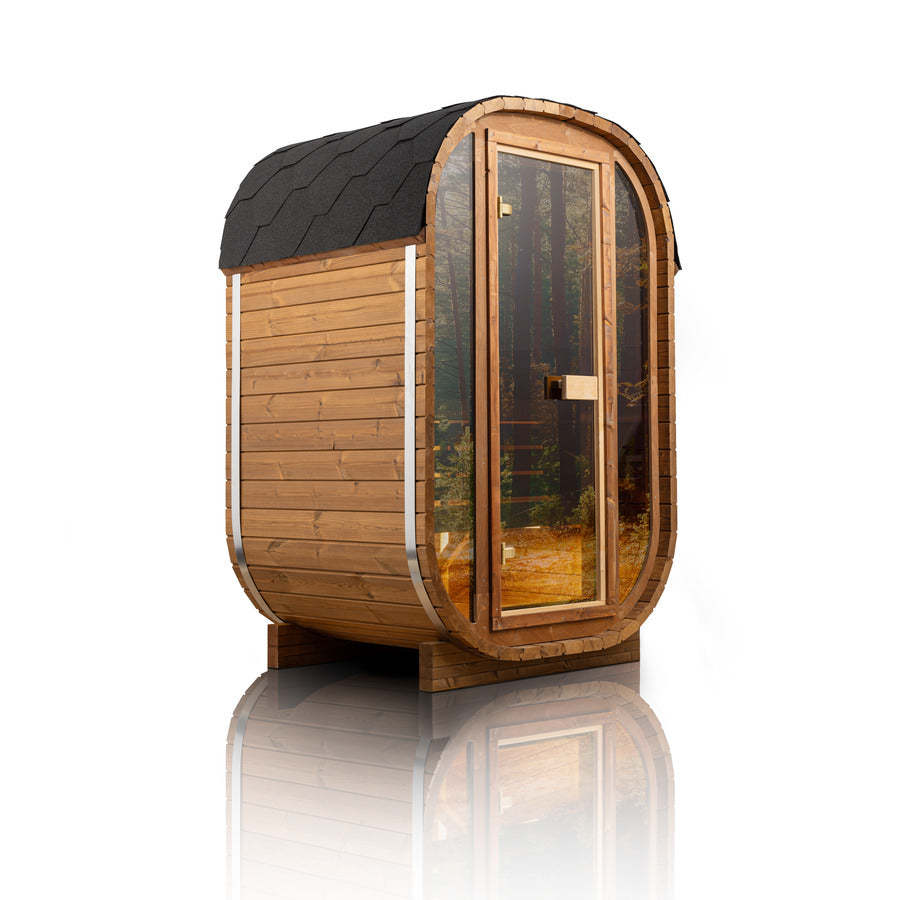
- Outdoor cedar barrel or traditional sauna ($4,000–$16,500+): The full experience. Higher installation requirements. More durability. Better for guys who want the traditional Finnish sauna feel and have a permanent outdoor space for it.
Browse our full sauna lineup on the shop page for specific models at every tier. We carry everything from blankets to outdoor cedar cabins, and all the accessories that make regular use easier.
Sauna recovery isn't a one-session fix. The benefit compounds. Workers who do 3–4 sessions per week consistently report that by week 3–4, their baseline soreness level drops noticeably. The body adapts — heat shock proteins accumulate, cardiovascular efficiency improves, and recovery between hard days becomes measurably faster. You don't feel it after one session. You feel it after a month.
Sauna Myths That Need Killing
Myth: "You sweat out toxins"
Your liver and kidneys handle detoxification. Sweat is mostly water and electrolytes. The benefit of sauna isn't toxin removal — it's the cardiovascular response, heat shock proteins, and circulation improvement. Real mechanisms, not folk medicine.
Myth: "More heat = faster recovery"
Wrong. The research sweet spot is moderate sustained temperature. Cranking it to maximum and sitting in for 45 minutes doesn't recover you faster — it depletes you. Stick to the protocol.
Myth: "Cold plunges are better for blue-collar recovery"
Different tools, different jobs. Cold is better for acute post-exertion inflammation. Heat is better for sustained accumulated soreness, stiffness, and overall recovery maintenance. For guys working physical jobs, heat therapy often fits better with the ongoing nature of the soreness — it's maintenance, not emergency response.
Myth: "You have to cool down with cold water after"
Contrast therapy is effective, but it's not required. A warm shower works fine. Letting your body cool naturally is also fine. The contrast protocol — sauna then cold — is the most effective combination if you want maximum response. But the sauna alone is still highly effective for muscle recovery on its own.
Ready to Recover Like You Mean It?
Portable and cabin infrared saunas built for home recovery — starting under $700. From personal units to full cabin builds. All backed by real return policies and US-based support.
Shop Saunas → See the Buying Guide →